Successful bettors rarely rely on a single bookmaker. Instead, they maintain a portfolio of accounts across different operators, allowing them to access better prices, take advantage of promotions, and avoid being limited by relying too heavily on one platform.
Managing multiple bookmaker accounts is an important operational skill. The more organised your portfolio, the easier it becomes to compare prices, move funds, and maximise long-term value.
Professional and semi-professional bettors typically maintain between 8 and 15 active bookmaker accounts.
Each bookmaker serves a different purpose within the portfolio.
Some provide the sharpest prices, others offer promotional value, while some specialise in certain sports or markets.
Rather than treating every bookmaker equally, experienced bettors assign each one a specific role.
These form the foundation of a serious betting operation.
Examples include:
These platforms generally offer:
Before placing any bet elsewhere, many bettors first check the prices available at these sharp bookmakers to understand what the market believes is the fair price.
These bookmakers balance competitive pricing with recreational betting features.
Common examples include:
They can occasionally offer prices superior to the sharp market and frequently run customer promotions.
However, unlike sharp bookmakers, they may begin restricting accounts that consistently beat their prices over an extended period.
For this reason, they are often used selectively rather than as a primary betting platform.
These bookmakers mainly target recreational customers.
They may include:
Although they often provide attractive promotional offers and occasional pricing mistakes, they usually have:
Many experienced bettors use these accounts tactically, taking advantage of promotions while accepting that account restrictions may eventually occur.
Soft bookmakers actively monitor customer behaviour for signs of professional betting activity.
Common indicators include:
None of these actions guarantee an account restriction, but together they may suggest that a customer is consistently identifying value.
Although no strategy guarantees that an account will remain unrestricted, some bettors adopt habits that may help accounts remain active for longer.
These practices should not compromise your betting discipline, but they may reduce the likelihood of appearing exclusively as a value bettor.
Nearly every licensed bookmaker requires identity verification before allowing significant withdrawals.
This process is commonly known as Know Your Customer (KYC).
Typical verification documents include:
Completing verification early helps prevent delays when you need to access your winnings.
Managing multiple bookmaker accounts becomes much easier with proper record keeping.
A simple spreadsheet can track:
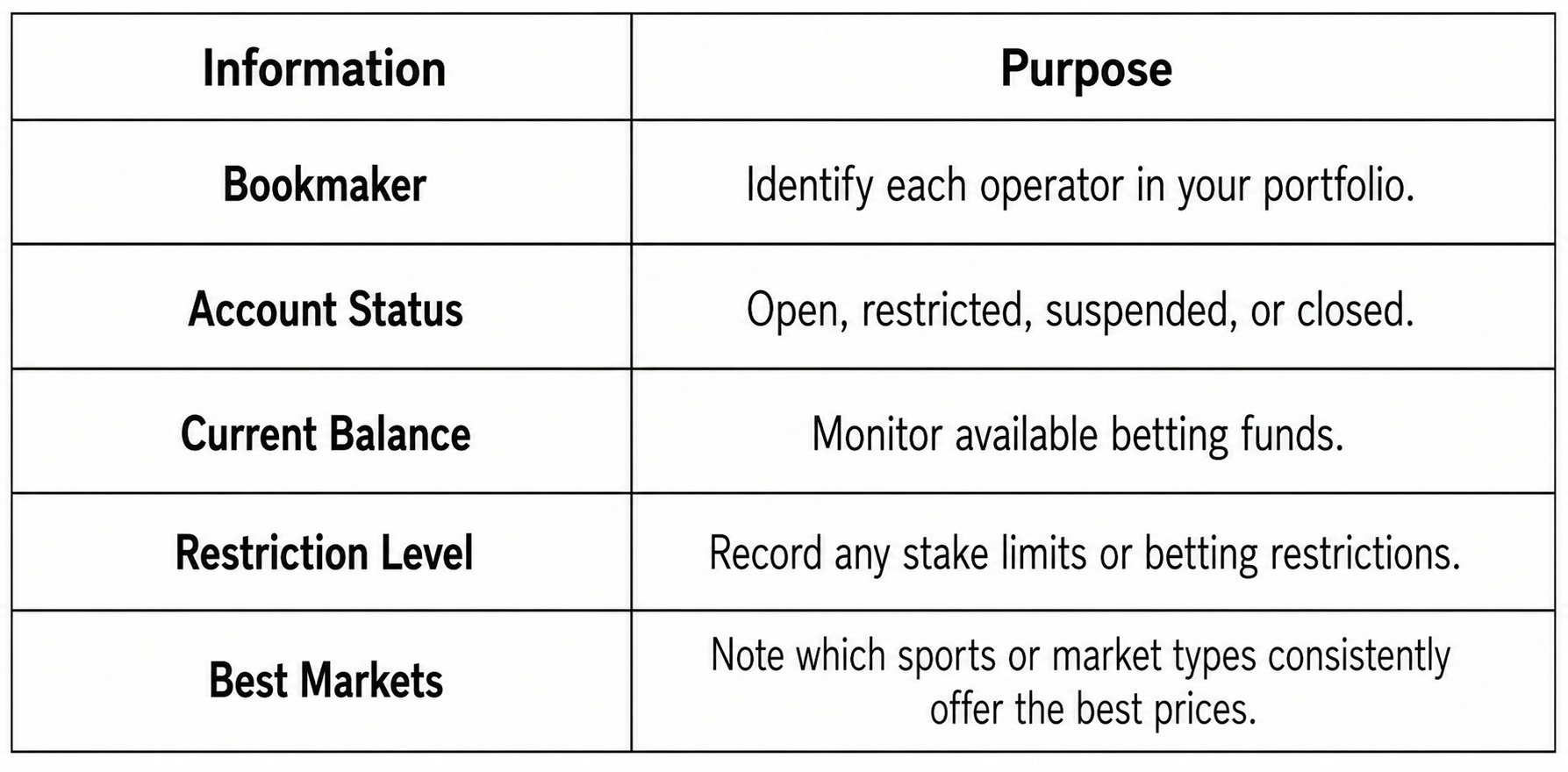
Updating this information after each betting session helps you stay organised and ensures that your bankroll is distributed efficiently across all active accounts.
A well-managed portfolio of bookmaker accounts provides greater access to competitive prices, promotions, and betting opportunities. By understanding the different roles of sharp, mid-tier, and soft bookmakers, maintaining good account records, completing verification early, and managing accounts responsibly, bettors can maximise flexibility while reducing operational problems over the long term.
